That moment a warning light pops on in Sheikh Zayed Road traffic isn’t just annoying – it’s uncertainty. Is it safe to keep driving? Will it turn into a bigger bill? And will the garage actually fix it the first time, or will you be back next week with the same problem?
If you’re searching for professional car repair Dubai drivers can rely on, what you really want is simple: clear answers, honest pricing, and fast turnaround without shortcuts. Here’s how to recognize truly professional service, what a good repair process looks like, and how to make sure you’re paying for the right fix – not guesses.
What “professional car repair Dubai” should actually mean
In a city where cars rack up heavy mileage quickly and heat pushes components hard, professionalism is not about a fancy waiting room. It’s about repeatable standards.
Professional repair means the shop confirms the fault with proper diagnostics, explains the cause in plain language, and recommends the repair that solves the problem at the root. It also means the work is done with the right tools and torque specs, fluids that meet manufacturer requirements, and quality parts that won’t fail early.
Just as important, professional service is predictable. You should know what’s being done, why it’s needed, how long it will take, and what it will cost before the work starts. If pricing changes, you should get a call first – not a surprise invoice at pickup.
Dubai conditions change the rules for car maintenance
Dubai is tough on vehicles in ways many drivers underestimate. High temperatures and stop-and-go traffic put extra load on cooling systems, batteries, A/C compressors, and transmissions. Sand and dust don’t just make the car dirty – they can accelerate wear in filters, sensors, and moving joints.
That’s why “wait and see” can get expensive here. A small coolant leak can become overheating. A weak battery can become a no-start in a parking lot. A minor vibration can turn into uneven tire wear and suspension damage.
Professional repair is proactive in the right way: not upselling, but spotting early signs that would cause breakdowns or unsafe driving if ignored.
The process you should expect from a professional garage
A professional shop runs repairs like a system, not like improvisation. If you’re evaluating a garage, listen for these steps in how they talk and how they work.
1) Intake that focuses on symptoms and driving conditions
A good technician will ask questions that narrow the cause: when the issue happens, whether it’s worse when the engine is cold or hot, whether the steering pulls under braking, whether the A/C fails at idle or only while driving. These details matter, especially with intermittent electrical and climate-control problems.
If the shop doesn’t ask anything and jumps straight to a parts quote, that’s usually a red flag.
2) Diagnostics before parts
Professional diagnostics is not just “plug in a scanner and read a code.” Codes are clues, not conclusions. A reliable shop confirms the fault with testing: checking live sensor data, inspecting wiring and connectors, performing smoke tests for vacuum leaks when needed, measuring battery and alternator output, and verifying pressure and temperature readings on A/C systems.
This step is what prevents repeat visits. It’s also what protects your budget, because replacing the wrong part is still expensive even if it’s “common.”
3) Transparent pricing and approval
Before work begins, you should get a clear estimate for parts and labor, along with the reason for the repair. Some jobs may have variables (for example, a seized bolt during suspension work, or additional leaks discovered during A/C service). A professional garage will explain those trade-offs upfront and get your approval if the scope changes.
4) Quality control and a real road test
After repairs, the job should be verified. That can mean confirming no leaks, confirming brake pedal feel and stopping performance, checking for stored fault codes, and road-testing for vibrations, alignment pull, and transmission shift quality. If the repair is electrical, it means confirming the system operates under load, not just for five seconds in the bay.
Repairs that most often need a “do it right” approach
Some categories are especially prone to misdiagnosis or quick fixes that don’t last. These are the areas where professional standards matter most.
Engine diagnostics and warning lights
A check engine light can come from something minor, but it can also point to issues that damage the catalytic converter or increase fuel consumption fast. Professional diagnosis distinguishes between symptoms and causes. For example, misfires might be spark plugs, ignition coils, injector issues, vacuum leaks, or compression problems – and the repair should match the test results, not a hunch.
Brake service and safety checks
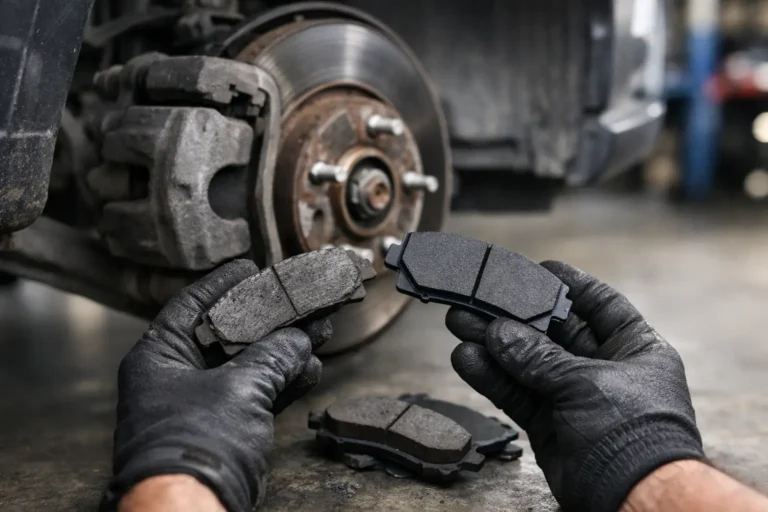
Brakes are not the place for “good enough.” Squeaking might be worn pads, but it could also be glazed rotors, stuck calipers, or uneven pad wear caused by slide pins. A professional brake service checks pad thickness, rotor condition, fluid quality, and caliper operation. It also considers driving style: delivery and rideshare drivers wear brakes differently than weekend drivers.
Transmission concerns
With transmissions, it depends. Some problems are fluid-related and can be solved with correct servicing. Others involve internal wear that won’t be fixed by a fluid change alone. A professional shop will scan for transmission codes, check fluid condition and level properly, and road-test to understand shift behavior before recommending a repair.
Suspension, steering, and tire wear
If your car feels unstable at speed, knocks over bumps, or chews through tires, the correct fix may involve multiple components. Suspension work should be diagnosis-led: ball joints, control arm bushings, tie rods, and shocks can create similar symptoms. Professional repair identifies the worn part, replaces what’s actually failing, and then verifies alignment and road behavior.
A/C performance in Dubai heat
A/C failures are common – and often mishandled. “Just add gas” is not professional service if the system is leaking. Proper A/C repair checks pressures, confirms compressor operation, inspects condenser airflow, and identifies leaks before recharging. It also verifies vent temperature under real conditions, because Dubai heat exposes weak systems immediately.
Electrical issues and battery drain
Modern vehicles have complex electrical networks. Battery drain can come from a weak battery, a failing alternator, a parasitic draw, or even a module that stays awake. Professional electrical repair uses structured testing to find the source. That’s how you avoid the cycle of replacing batteries that keep dying.
How to choose the right garage near you in Dubai
Most drivers don’t want to become car experts – they want to avoid wasting time and money. When you’re comparing shops, focus on the signals that correlate with reliable outcomes.
Ask how they diagnose, not just what they replace. Ask whether they use modern diagnostic equipment and whether they can explain the findings in simple terms. Pay attention to how they discuss pricing: professional shops are comfortable being transparent, because they’re not building the quote around surprises.
Turnaround time also matters, especially for commuters and working drivers. Fast service is good, but speed without a process can lead to repeat repairs. The best garages balance efficiency with verification – that’s what keeps your car on the road.
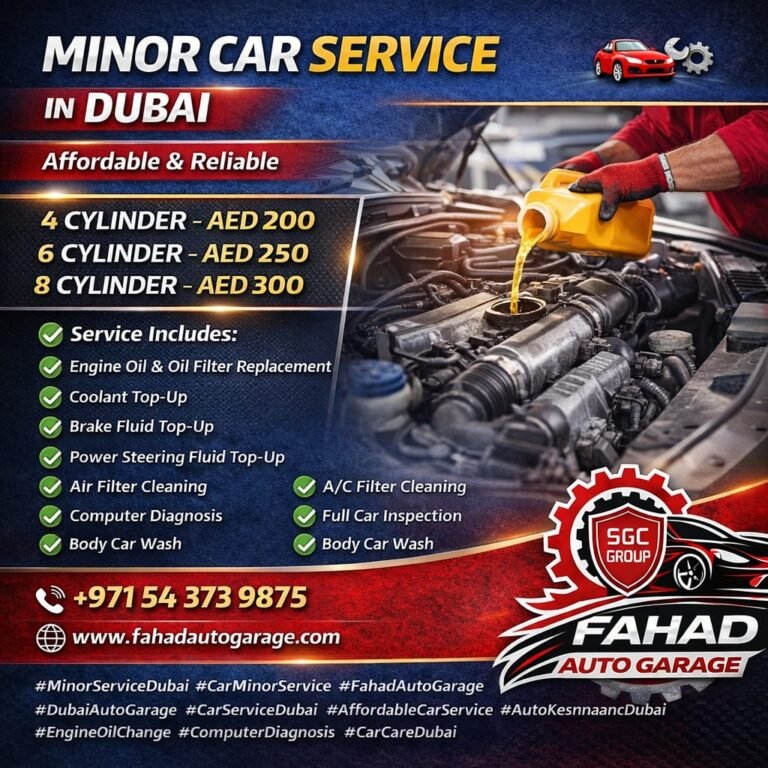
If you’re close to Hor Al Anz and want a dependable neighborhood option, Fahad Auto Garage focuses on end-to-end mechanical, electrical, and A/C repair with modern diagnostics, honest pricing, and quick turnaround – the combination that reduces repeat visits and keeps your schedule intact.
What you can do before your appointment to save time and money
A little preparation helps the technician diagnose faster, which often lowers total cost.
If possible, note when the issue started, whether it happens at specific speeds, and whether it’s tied to temperature or fuel level. Take a quick photo of warning lights. If you’ve had recent work done elsewhere, share what was replaced and when. And if you hear a noise, describe it in a practical way: clunk over bumps, squeal only when braking, humming that increases with speed.
This isn’t about telling the shop how to do their job. It’s about giving them clean inputs so they can test the right areas first.
The trade-offs: OEM vs aftermarket parts and “cheap” vs “affordable”
Not every car needs the most expensive option, but every car needs the correct option.
OEM parts can offer strong consistency, especially for sensors, ignition components, and certain drivetrain parts. Quality aftermarket parts can be a smart value when chosen carefully. The risk is the low-quality tier: it may fit, but fail early, create noise, or trigger new warning lights.
A professional garage should explain the options in plain terms and recommend what makes sense for your vehicle, mileage, and how long you plan to keep it. Affordable pricing is great – but “cheap” becomes expensive if it causes comebacks.
When to stop driving and get help immediately
Some symptoms are worth treating as urgent. If the temperature gauge rises, if the brake pedal feels soft, if the car shakes hard under braking, if you smell burning, or if the oil pressure warning appears, it’s safer to stop and get the car checked. Continuing to drive can turn a manageable repair into major engine, brake, or transmission damage.
Professional repair starts with protecting your safety. The right shop will tell you when it’s safe to drive and when it isn’t – even if that means you come in sooner than planned.
If you want one standard to guide every decision, use this: choose the garage that can explain the problem clearly, price it honestly, and prove the fix with proper testing – and you’ll spend less time worrying every time you turn the key.