A car A/C problem usually shows up at the worst time – stuck in traffic, midday heat, and air blowing that feels barely cooler than outside. In Dubai, that is not a small comfort issue. It affects focus, driver fatigue, and how usable your car feels day to day.
The good news is that not every A/C issue means a major repair. Some problems are simple. Others need proper testing before anyone starts replacing parts. If you want to know how to fix car AC not cooling, the right approach is to start with the obvious signs, rule out small issues first, and then move quickly on anything that points to a refrigerant leak, compressor fault, or electrical problem.
How to fix car AC not cooling starts with the symptoms
Before you assume the worst, pay attention to what the system is actually doing. A car A/C that blows warm air all the time points to a different issue than one that cools for a few minutes and then fades. Weak airflow is also different from normal airflow with no cooling.
If the air is strong but warm, the system may have low refrigerant, a compressor issue, or a sensor or electrical fault preventing proper cooling. If the air is cold on one side and warm on the other, that can point to blend door trouble or uneven system performance. If airflow is weak, the cabin air filter, blower motor, or evaporator condition may be the real problem rather than the refrigerant circuit itself.
This matters because the fix depends on the pattern. Recharging refrigerant without confirming the cause can waste money and delay the real repair.
Start with the simple checks you can do right away
Begin with your climate settings. Make sure the A/C is on, the temperature is set low, and recirculation mode is enabled. Recirculation helps the system cool cabin air faster instead of constantly trying to chill hot outside air. In very high heat, that difference is noticeable.
Next, check airflow from the vents. If it is much weaker than usual, a dirty cabin air filter may be restricting circulation. This is one of the easiest and most overlooked causes of poor cooling performance. Replacing the filter is straightforward, affordable, and often worth doing as part of regular maintenance anyway.
Then look under the hood with the engine running and A/C on. If the compressor clutch is not engaging, the system may have low refrigerant, a blown fuse, a bad relay, pressure switch issues, or compressor failure. If you hear repeated clicking, squealing, or grinding, stop there and have it inspected. Noise is a warning sign, not something to ignore.
Also pay attention to engine temperature. If the engine is running hot, A/C performance can drop. Cooling system problems and A/C issues sometimes overlap more than drivers expect.
Low refrigerant is common, but it is not the whole story
When people search for how to fix car AC not cooling, they often assume the answer is just adding refrigerant. Sometimes that helps, but refrigerant does not simply get “used up” like fuel. If levels are low, there is usually a leak somewhere in the system.
That leak may be small and slow, or it may be more serious. Common leak points include hoses, seals, the condenser, service ports, and the evaporator. In dusty, hot driving conditions, the condenser at the front of the vehicle can also take damage from road debris and wear over time.
If your A/C was cold last month and is now blowing warm air, a leak is likely. If it has been gradually getting weaker over a long period, that still points toward refrigerant loss, but the leak may be slower and harder to spot.
A proper repair means finding the leak, repairing it, evacuating the system correctly, and recharging it to specification. Simply topping it off without leak testing is often a short-term patch.
The condenser may be blocked or damaged
Your condenser releases heat from the refrigerant, and it needs clean airflow to work properly. If it is clogged with dirt, sand, or debris, cooling efficiency drops. If it is bent, leaking, or physically damaged, the system may struggle or stop cooling entirely.
This is especially relevant in hot climates where the A/C already works hard. Even a small reduction in condenser performance can make the cabin take much longer to cool.
Sometimes a visual inspection reveals obvious damage. Other times, pressure readings and dye testing are needed to confirm the problem. The trade-off here is simple: cleaning is quick and low cost if buildup is the issue, but a leaking condenser needs replacement, not a temporary workaround.
Electrical faults can stop cooling without obvious warning
Modern vehicle A/C systems rely on switches, sensors, relays, control modules, and wiring. A blown fuse or failed relay can prevent the compressor from engaging. A bad pressure sensor can send the wrong signal. Wiring damage can create intermittent faults where the A/C works one day and fails the next.
These problems are frustrating because the symptoms can look similar to low refrigerant or compressor trouble. That is why proper diagnostics matter. Guessing at parts can get expensive fast.
If your A/C cuts in and out, only works at certain fan speeds, or behaves unpredictably, electrical testing should be part of the inspection. This is one area where modern diagnostic equipment saves time and reduces repeat visits.
Compressor problems usually need professional repair
The compressor is the heart of the A/C system. When it fails, cooling drops sharply or stops completely. In some cases the clutch fails. In others, the compressor itself wears internally and can no longer build the pressure needed for proper cooling.
Signs include loud noises when the A/C is turned on, warm air despite correct settings, visible clutch problems, or metal contamination in the system. If the compressor has failed internally, the repair may also involve flushing the system and replacing related components to prevent repeat damage.
This is not a good area for shortcuts. Installing a new compressor without addressing contamination, leaks, or related failures can lead to another breakdown.
Why weak airflow is not always an A/C gas problem
If the air is cool but barely coming through the vents, think beyond refrigerant. A clogged cabin filter is the most common cause, but not the only one. The blower motor may be weak, the evaporator may be restricted, or the air distribution doors may not be moving correctly.
In some vehicles, the issue is a blend door actuator that is stuck or failing. That means the system is producing cold air, but it is not routing it properly into the cabin. You may notice inconsistent temperatures, airflow changes when turning, or odd clicking behind the dashboard.
This is exactly why symptom-based diagnosis works better than assumptions. Strong airflow with no cooling and weak airflow with some cooling are not the same repair.
When DIY stops making sense
There is a difference between checking settings and replacing a cabin filter versus opening the A/C system or trying to force a recharge. Automotive A/C systems are pressurized and sensitive to exact refrigerant levels. Too little refrigerant hurts performance, but too much can also create problems.
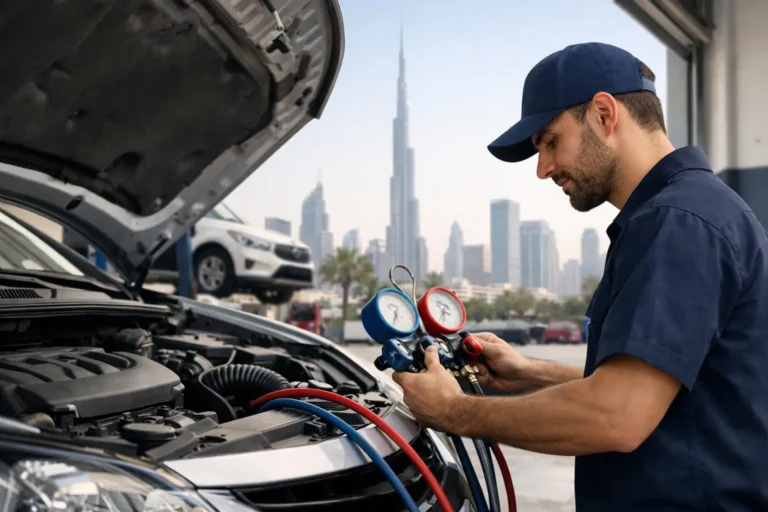
If you see oily residue around A/C components, hear compressor noise, notice repeated loss of cooling, or find that the system only cools while driving, it is time for proper testing. Pressure readings, leak detection, vent temperature checks, and electrical diagnosis give a much clearer answer than trial and error.
For drivers who rely on their vehicle every day, fast accurate repair usually costs less than guessing. That is especially true for rideshare drivers, delivery vehicles, and family cars where downtime is a real problem.
The smartest fix is the one that prevents repeat failure
If you want a lasting answer to how to fix car AC not cooling, focus on root cause, not just symptom relief. A recharge may be appropriate if the system is low, but only after confirming why. A cabin filter may restore airflow, but not if the blower motor is failing. A new compressor may be necessary, but not without checking the rest of the system.
At Fahad Auto Garage, the best results come from a straightforward process: inspect the system, test pressures and electrical operation, identify leaks or failed parts, and repair only what is needed. That keeps pricing honest and gets the car back to reliable cooling faster.
If your A/C is blowing warm, weak, or inconsistent air, do not wait for it to fail completely. Catching the issue early often means a smaller repair, a faster turnaround, and a more comfortable drive the next time the heat starts building inside the cabin.