You notice it on a straight road first. The steering wheel is centered, but the car keeps drifting left or right and you have to correct it every few seconds. If you are asking, why is my car pulling to one side, the short answer is that something in the tires, brakes, alignment, steering, or suspension is no longer working evenly.
Sometimes the cause is minor, like uneven tire pressure. Sometimes it points to a safety issue that should not wait, especially if the pull gets worse during braking or after hitting a pothole. The key is not guessing. A car that pulls to one side is telling you that one side of the vehicle is behaving differently from the other.
Why is my car pulling to one side while driving?
Most drivers assume it is always an alignment problem. Alignment is a common cause, but it is not the only one. Pulling can start from the road surface, the tires, worn suspension parts, a sticking brake caliper, or steering components with excess play.
That is why the symptom matters. Does it pull all the time, only when braking, only at higher speeds, or right after tire service? Those details help narrow the problem quickly and avoid replacing parts that are not actually at fault.
The most common causes
Uneven tire pressure
This is the fastest thing to check and one of the most overlooked. If one front tire has lower pressure than the other, the vehicle can start pulling to that side. Even a modest pressure difference can affect handling, especially on SUVs and heavier passenger vehicles.
Dubai heat can make tire conditions less predictable, and pressure that looked fine weeks ago may not be fine now. If the pull started suddenly, check pressure first before assuming something more serious.
Wheel alignment issues
Misalignment is one of the leading reasons a car drifts or pulls. It often happens after hitting a curb, driving through deep potholes, replacing suspension parts, or simply through normal wear over time.
A bad alignment changes the angle at which the tires meet the road. That can make the vehicle pull to one side, cause the steering wheel to sit off-center, and wear the tires unevenly. The trade-off here is that alignment may fix the problem completely – but only if there is no hidden tire, brake, or suspension issue underneath.
Tire wear or tire damage
A worn tire can cause a pull even when air pressure is correct. If one tire has more tread wear than the other, or if there is internal tire damage, the car may not track straight.
This is also why a pull can start after tire replacement or rotation. Tires that are different in age, brand, tread pattern, or wear level do not always behave the same. In some cases, the problem is not the vehicle at all. It is a tire pull caused by one tire creating more rolling resistance than the others.
Brake problems
If the car pulls more when you press the brake pedal, the brake system should be checked soon. A sticking caliper, uneven brake pad wear, or restricted brake hose can cause one wheel to brake harder than the other.
This is not something to leave for later. Brake pull affects stopping stability, and that becomes a serious safety issue in traffic. If your steering wheel jerks or the car veers while braking, book an inspection as soon as possible.
Suspension or steering wear
Worn control arm bushings, ball joints, tie rod ends, shocks, struts, or other steering and suspension parts can all lead to pulling. These components keep the car stable and help both front wheels respond evenly.
When one part wears out, the vehicle may feel loose, wander on the road, or pull more over bumps. This kind of issue usually does not improve on its own. It tends to get worse gradually, and it can also throw off alignment repeatedly.
Why is my car pulling to one side when I brake?
If the pull mostly happens under braking, that usually points away from simple alignment and more toward the brake system itself. A stuck caliper is a common example. One side may grip harder, drag, or release slowly, making the vehicle steer off line as weight shifts forward.
Brake pull can also happen if one rotor or pad is worn differently from the other side, or if there is contamination on one side. In some vehicles, suspension wear adds to the effect during braking because the front end shifts unevenly.
The important point is this: a car that only pulls slightly during normal driving but pulls sharply when braking should be checked promptly. Your safety is the priority, and brake faults rarely stay small for long.
When it might be the road, not the car
Not every drift means a repair is needed. Many roads are built with a slight slope so water drains properly. This can make a vehicle drift gently toward one side, especially in the lane nearest the shoulder.
The difference is consistency. If your car pulls on multiple roads, needs frequent steering correction, or the steering wheel no longer sits straight, the issue is likely in the vehicle. If it only happens on one specific road surface, the road shape may be part of what you are feeling.
Signs the problem needs immediate attention
A mild pull is still worth checking, but some warning signs move this into urgent territory. If you notice any of the following, do not wait too long:
- The vehicle pulls hard during braking
- The steering wheel shakes or feels loose
- One tire is wearing much faster than the others
- You hear clunking, grinding, or squealing
- The car started pulling right after hitting a curb or pothole
- You smell something hot near a wheel after driving
These symptoms can point to active brake drag, damaged suspension parts, or tire damage. All of those can affect control and tire life.
What a proper inspection should include
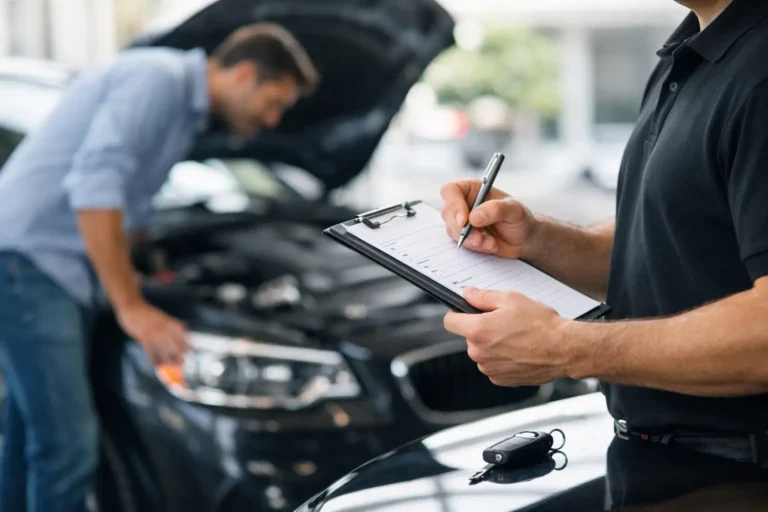
A quick opinion is not enough for this kind of problem. Pulling has multiple possible causes, so the right approach is a full check rather than jumping straight to alignment.
A proper inspection should start with tire pressure, tire condition, and tread wear. After that, the steering and suspension parts need to be checked for looseness or damage. The brake system should be inspected if the pull is stronger during stopping. Only then does alignment data tell the full story.
This is where modern diagnostic equipment helps. It speeds up the process and reduces guesswork, especially when the issue involves more than one system. At Fahad Auto Garage, this kind of practical diagnosis matters because it helps fix the real cause the first time instead of sending you back with the same problem a week later.
Can you keep driving if your car pulls?
It depends on how severe it is. If the pull is very light, the car feels stable, and the issue seems tied to tire pressure, you may be able to correct that and monitor it. But if the pull is strong, sudden, or linked to braking, steering looseness, or unusual noises, it should be treated as a repair issue, not a watch-and-wait issue.
Even when the car still feels drivable, pulling creates extra tire wear and adds stress to steering and suspension components. That means a problem that starts small can become more expensive if it is ignored.
How to respond before booking service
There are a few sensible checks you can do without tools or guesswork. Make sure all tires are inflated to the recommended pressure. Look for obvious tire damage or uneven wear. Pay attention to whether the pull happens all the time or mostly while braking.
Beyond that, avoid self-diagnosing too far. Modern vehicles can hide suspension, brake, and alignment problems that are not visible in a parking lot. If the car is not tracking straight, the most efficient move is a professional inspection with clear findings and honest pricing.
If you are in Deira, Abu Hail, Nahda, Qusaish, Mamzar, or nearby areas, getting it checked early can save you from rapid tire wear, poor braking performance, and a bigger repair bill later.
A car should feel steady, predictable, and easy to control. If yours keeps drifting off line, trust the symptom and act on it. The sooner the cause is identified, the easier it usually is to fix.